
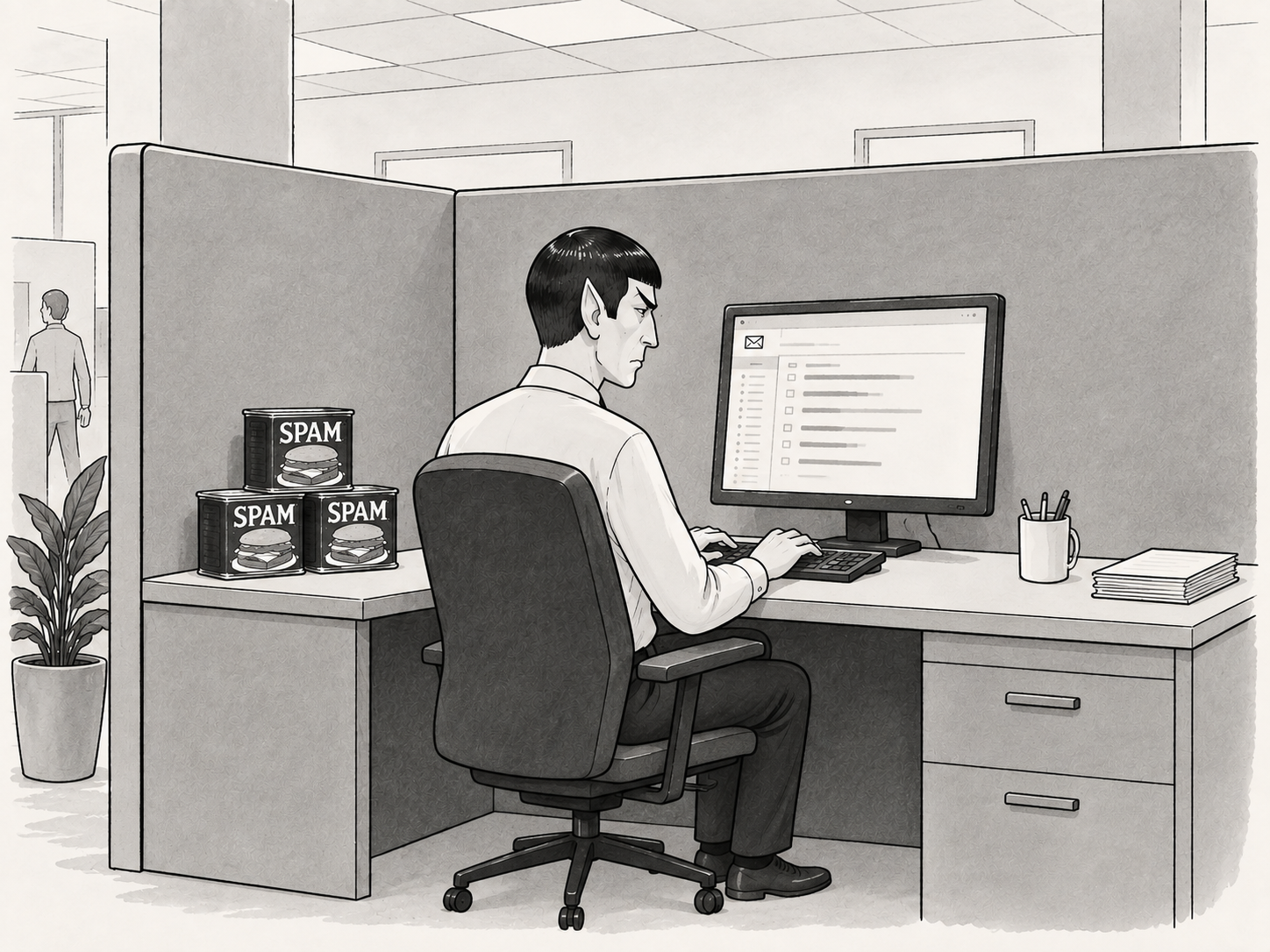
I unsubscribed from a marketing email recently and got the familiar message: Please allow up to 10 business days for your request to be processed.
Ten business days?
I can transfer money between banks in seconds, unlock a car with my phone, and watch a retailer recognize that I abandoned a shopping cart quickly enough to email me about it while I’m still deciding whether I actually abandoned it. Yet somehow it may take two weeks for a sophisticated marketing operation to figure out that I clicked “unsubscribe.”
There is a reason for the 10-day language. Under the CAN-SPAM Act, companies have up to 10 business days to honor an email opt-out request. That is the legal standard, but there is a considerable difference between meeting the minimum requirements of the law and creating a good customer experience.
That difference matters to your brand.
The customer already told you what they want
Marketers spend enormous amounts of time and money trying to understand what people want. We analyze behavior, build personas, map journeys, conduct research, measure sentiment, develop predictive models, and increasingly throw AI at the problem.
An unsubscribe requires none of that.
The customer has provided an unusually clear piece of first-party data: I do not want you to send me these emails anymore.
That should be among the easiest customer preferences in your entire technology stack to honor. Instead, plenty of organizations continue sending email for days after someone unsubscribes, sometimes accompanied by a convenient disclaimer that processing the request could take up to 10 business days.
Perhaps that is legally permissible, but the customer doesn’t care about your statutory processing window. The customer knows they asked you to stop, you acknowledged the request, and then you showed up in their inbox again.
At that point, there is another button available: Report spam.
You just turned an unsubscribe into a spam complaint
An unsubscribe is useful information. Someone no longer wants your marketing email, so you remove them from the audience. Nothing particularly terrible has happened.
A spam complaint is different because it sends a signal to Gmail, Outlook, and other mailbox providers that people consider your messages unwanted. Accumulate enough of those signals, and you can create deliverability problems that affect your ability to reach the people who actually do want to hear from you.
Think about how unnecessary that escalation is. The customer politely asked to leave, and the organization responded by continuing to communicate because it was technically allowed to do so. The customer then uses the more forceful tool available to make the messages stop.
Marketing has managed to turn a clean opt-out into a negative signal against its own email program.
That is quite an accomplishment.
But the emails were already scheduled
This explanation might have made sense when marketing databases, email vendors, and customer records were held together with spreadsheets, batch uploads, and prayer. It is much harder to defend today.
Scheduling an email is not the same as sending one. Modern marketing platforms are built around customer records, triggers, preferences, automation, and suppression lists. If your technology can recognize that I visited a particular product page on Tuesday and decide that I should receive a particular message on Wednesday, it should also be capable of recognizing that I unsubscribed Tuesday afternoon and suppressing Wednesday’s message.
There will always be edge cases. A message may already be far enough into the delivery process that it cannot reasonably be stopped, or an organization may have several genuinely disconnected systems that need to synchronize. Those are explanations for an occasional stray email, not persuasive reasons for continuing to market to someone for another week or two.
The industry is already moving beyond the old legal standard anyway. Google tells subscription senders to honor unsubscribe requests within 48 hours, and qualifying bulk senders are required to support one-click unsubscribe.
The technology has changed. Customer expectations have changed. “We have 10 business days” increasingly sounds less like an operational necessity and more like an organization choosing the most generous interpretation of what it is permitted to do.
That choice tells me something about the brand.
Your brand is what happens after the click
Organizations spend enormous amounts of energy defining their brands through platforms, pillars, value propositions, voice guides, messaging architectures, visual systems, and customer promises. All of those things have value, but customers do not actually experience a brand platform.
They experience the organization.
They experience what happens when a package arrives late, whether someone answers the phone, how difficult a return is, whether the website works, whether an employee has enough authority to solve a simple problem, and whether the company respects a request after the customer has clearly made one.
They also experience what happens after they click unsubscribe.
These small interactions are easy to dismiss because nobody puts “unsubscribe workflow” into the brand strategy. That is exactly what makes them so revealing. Advertising tells customers what an organization would like them to believe. Everyday interactions show customers how the organization actually behaves.
Brand is built in the distance between those two things.
A company can spend millions telling me that it puts customers first, respects my time, makes life easier, or listens to my needs. If I say “stop emailing me” and it takes the company two weeks to comply, that mundane little interaction may tell me more than the campaign ever did.
Sometimes the best brand experience is letting someone leave
Marketing is understandably obsessed with acquisition, retention, engagement, and conversion, which has led to an impressive collection of techniques designed to make departure just a little more difficult. Are you sure you want to unsubscribe? Would you prefer fewer emails? Would you like to change your preferences? Could you tell us why you are leaving?
Some of those options are genuinely useful. Sometimes, though, the customer simply wants to leave.
There is value in respecting that decision without friction.
Someone who unsubscribes is not necessarily rejecting your company, your products, or your brand. They may simply receive too much email. They may prefer another channel. Their circumstances may have changed. They may come back six months from now, buy something from you next year, recommend you to someone else, or never interact with you again.
You do not control that.
You do control the final experience you give them.
A clean, immediate unsubscribe says something surprisingly positive: We heard you, and we respected your choice.
That is not a marketing failure. It is a successful brand interaction.
The 10-day rule is a ceiling, not a strategy
CAN-SPAM gives businesses up to 10 business days to honor an unsubscribe request. It does not require businesses to use them.
That distinction is bigger than email.
There is often a gap between what an organization is required to do and what it chooses to do. You can make the return difficult because the policy allows it, or you can make it easy. You can bury the cancellation option, or you can make it obvious. You can force customers through a retention gauntlet, or you can respect their decision. You can continue emailing someone because the law says you technically have nine days left, or you can stop.
Those may look like operational decisions rather than branding decisions, but customers do not divide their experiences according to your org chart.
Neither should you.
Because your brand is not simply what happens when somebody chooses you. It is also what happens when they ask you to leave them alone.
And if they have to hit Report spam to make that happen, you have already told them something about your brand that no campaign is going to fix.