
From the outside, marketing often looks like a craft practiced at a distance. Words appear on screens. Campaigns launch. Brands take shape in colors, logos, and carefully chosen language. The work can seem polished, almost quiet. But anyone who has spent time doing marketing inside an organization understands something different. The work is rarely quiet. It is rarely distant. Marketing, in its truest form, is a contact sport.
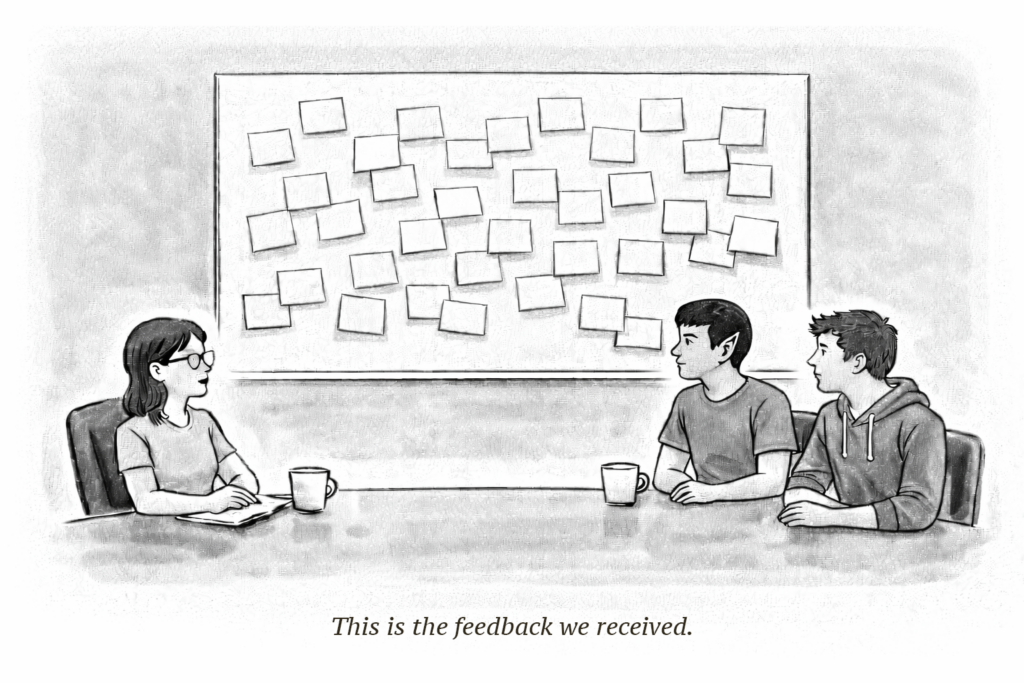
Not the kind defined by physical collision, but by proximity. By friction. By the constant interplay of ideas, priorities, and perspectives that surround any organization trying to move forward. Marketing sits at the crossroads of those forces. It is where strategy meets expression, where ambition meets reality, where internal belief meets external perception.
Part of the reason marketing attracts so much contact is its ubiquity. Everyone experiences marketing every day. We see ads while scrolling our phones, hear campaigns on the radio, notice billboards while driving, and encounter brands in nearly every corner of daily life. Because of that constant exposure, marketing can appear deceptively simple. Almost everyone has an opinion about what makes a message effective or what a campaign should look like. In many organizations, that familiarity translates into a sense that marketing is something anyone can do.
To some degree, that instinct is understandable. Marketing deals in language, imagery, and storytelling—tools that feel accessible. But what appears simple on the surface is usually the result of careful thinking beneath it. Effective marketing is rarely just about making something look good or sound appealing. It is about understanding audiences, aligning strategy with behavior, and translating complex organizational priorities into messages that resonate in the real world.
That ubiquity helps explain why marketing conversations tend to attract so many voices. People bring perspectives shaped by their own experiences as consumers, customers, or observers. Those perspectives can be valuable. They can also create a crowded field of opinions about what the message should say or how the story should be told. Navigating that landscape is part of the contact inherent in the work.
Every organization contains multiple stories about itself. Leaders talk about vision. Teams talk about the work. Customers talk about the experience. Each of those perspectives is real, yet none of them is complete on its own. Marketing becomes the place where those fragments are brought into contact with one another and shaped into something coherent.
That process is rarely linear. A conversation about messaging may reveal deeper questions about audience. A request for a campaign may expose uncertainty about the problem it is meant to solve. What begins as a tactical discussion often unfolds into something more reflective. Marketing, at its best, does not simply amplify a story. It helps an organization understand the story it is actually telling.
This is why marketing cannot be practiced from the sidelines. The work requires presence. It requires stepping into conversations where priorities overlap and sometimes collide. It requires listening carefully enough to hear what people mean, even when it is not what they say. And it requires the confidence to gently redirect the conversation when clarity begins to drift.
Over time, something subtle begins to change. The role of marketing evolves from producing materials to shaping understanding. Conversations shift from requests for execution to invitations for perspective. Instead of asking, “Can you make this?” people begin asking, “How should we think about this?”
That shift rarely happens all at once. It emerges slowly, almost imperceptibly, through a series of moments when marketing chooses not to simply accept the premise of a request but to explore it. A campaign idea becomes a conversation about audience. A request for a brochure becomes a discussion about the story the organization is trying to tell. A question about promotion opens the door to a deeper examination of purpose and value. In those moments, marketing stops acting solely as a production function and begins acting as a lens through which the organization sees its own work more clearly.
When that happens, the nature of the interaction changes. Marketing is no longer responding only to what others think should be communicated; it is helping frame the questions that determine what should be communicated in the first place. Colleagues begin to realize that messaging is not just language layered on top of strategy. It is an extension of strategy itself. The way an organization describes its work reveals what it believes about its mission, its audience, and its place in the world.
This is when marketing begins to influence how decisions are made, not just how they are presented. The conversation moves upstream. Instead of appearing at the end of a process to package an initiative, marketing is invited earlier, when the idea itself is still forming. The focus shifts from “How do we promote this?” to “What are we really trying to accomplish, and how will people experience it?”
At that point, marketing becomes something closer to a translator of meaning. It helps organizations see where intention and perception might diverge. It notices where language is too inward-facing or where assumptions about audience need to be reconsidered. And by asking thoughtful questions—sometimes simple ones—it creates space for clarity to emerge.
The contact is not always comfortable. Organizations are full of people who care deeply about their work, and with that care comes conviction. But within that friction is where the most meaningful insight often emerges. When perspectives meet honestly, the message becomes sharper. The purpose becomes clearer.
And in those moments, the deeper nature of marketing becomes visible. It is not just the work of communicating outward. It is the work of helping an organization see itself more clearly—and helping others see the value of what it brings into the world.
For all its creativity and craft, marketing ultimately happens in the space where ideas meet reality. That space is rarely quiet. It is full of energy, motion, and human perspective.
Which is why, for those who practice it well, marketing will always be a contact sport.