
Every organization says it wants strong leadership.
What it usually wants is someone capable and easy. Someone who delivers without making anything uncomfortable.
Then someone shows up who actually does the job right.
They don’t study the mess. They fix it. Fast. Effectively. Decisively.
That’s where the friction starts.
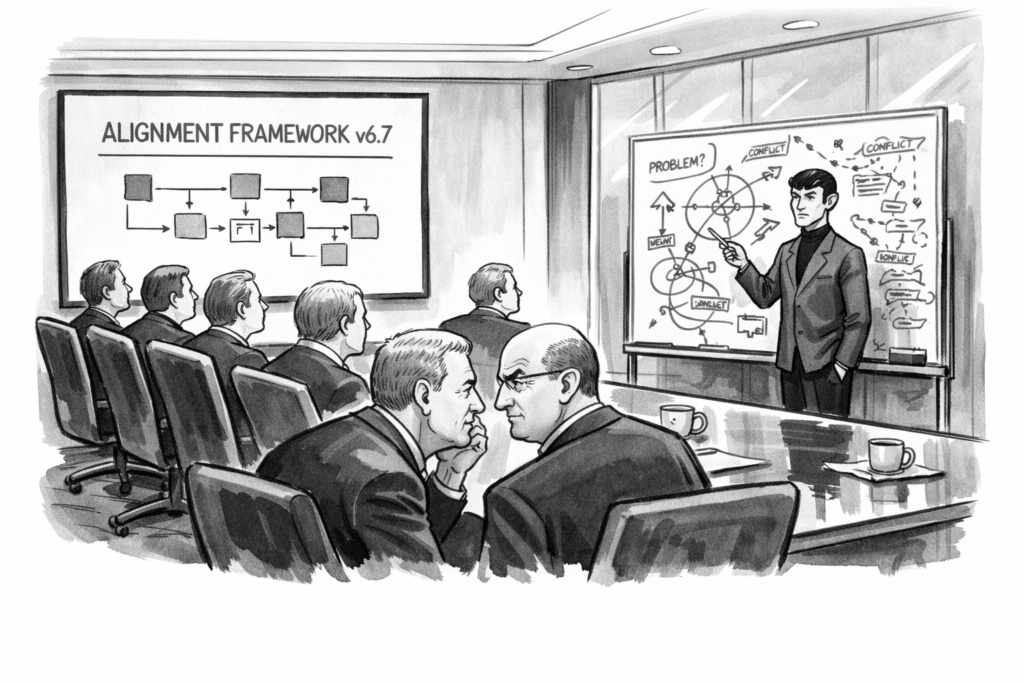
Because they don’t just execute. They see things. Blurred authority. Decisions happening off-book. Politics creeping into places leadership should be.
They try to work within it. Then around it. Eventually, they say it out loud.
That’s when they become “difficult.”
They coach. They set expectations. They build systems. They don’t hide behind shortcuts.
While others are aligning, they’re moving—launching, rebuilding, making things work. They don’t wait for clarity. They create it.
They understand the politics. They just don’t confuse it with the job.
That creates tension in environments where perception matters more than progress.
So sometimes they succeed.
And sometimes they don’t.
Not because they can’t do the work.
Because they made something visible the organization wasn’t ready to deal with.
If someone steps into a role that’s critical, unstable, and expected to move fast—and they do—that’s not the interesting part.
The interesting part is what the organization does next.
Most don’t do much.
They treat it like a personnel issue instead of a systems issue. They swap people and keep the conditions.
And the pattern repeats.
Most organizations don’t have an effort problem. They have an alignment problem.
Marketing says one thing. Leadership signals another. Operations behaves a third way. Work slows down not because people aren’t capable, but because the system is sending mixed messages.
Brand Socket fixes that.
It combines real marketing experience with structure—project management discipline, message clarity, and a design lens for how meaning actually gets created and interpreted. It uses appreciative inquiry to surface what’s working and build from it, instead of defaulting to critique.
The work is simple, but not easy: get clear on what the organization is actually trying to do, align how decisions get made, and make sure communication reflects reality.
When that happens, execution speeds up. Friction drops. Teams stop working at cross purposes.
The signal is usually already there.
The work is making it usable.